
Features of teaching children with Down syndrome: effective methods, recommendations and support
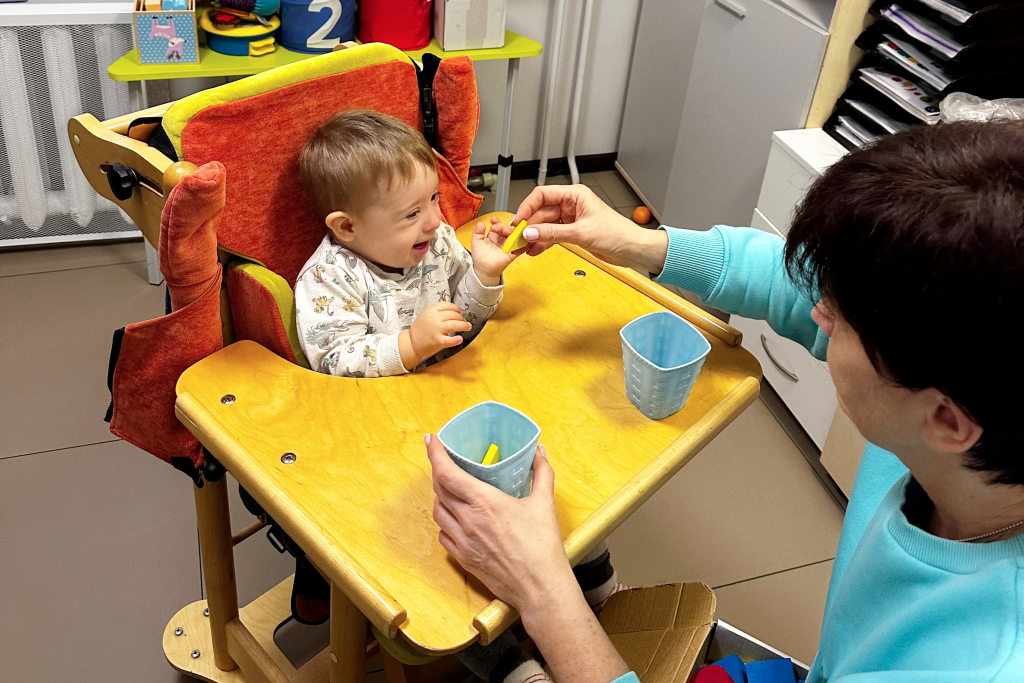
Teaching children with Down syndrome is not only an opportunity to give them knowledge, but also a chance to help them socialize, learn to communicate and find their place in society. Thanks to modern methods, the right approach and support from both parents and specialists from the International Center for Rehabilitation and Neurophysiology, children can successfully master the curriculum, develop their strengths and receive a quality education.
In this article, we will consider in detail the features of the educational process, key methods, approaches and recommendations for parents.
1.Cognitive features of children with Down syndrome
To make teaching effective, it is important to understand what the weaknesses and strengths are, as well as the needs of the child:
✔Slower speed of information processing - children need more time to assimilate the material, so it is important to give information in small parts;
✔Concentration problems – children can quickly lose interest in the task, so lessons should be short, and the learning material should be interesting and interactive;
✔Better perception of visual information – a child remembers information faster through images, color schemes, pictograms and videos than through oral explanations;
✔Good “auditory” memory – many children remember rhymes, songs, movements well, which can be used in learning;
✔Need for repetition – to consolidate skills, it is necessary to repeat the studied material in different formats;
2.How to adapt the learning process?
-Individual approach to learning: each child has unique abilities, so the learning process should be adapted to their level of development;
-Flexible program: it is important to rely on the child’s strengths. For example, if it is easier for a child to remember through pictures, it is worth using flashcards or diagrams;
-Learning through action: children with Down syndrome learn better if they can “feel” the material. For example, math can be learned through counting objects, and grammar through role-playing games;
-Different forms of learning: you need to alternate activities: use drawing, singing, physical exercises, sensory games;
-Simplified instructions: they should be clear and short (for example, instead of “Open your notebook and write three sentences,” it is better to say: “Take a pen. Write your name.”);
-Using alternative communication methods: children with Down syndrome may have difficulty speaking, so it is important to use sign language, pictograms (PECS), cards with pictures;
3.The best teaching methods
✔Global reading method:
This method consists in the child memorizing words as a whole, and not by letters.
How does it work?
First, the child is shown a word with a picture (for example, “apple” + a picture of an apple). Then, the child gradually memorizes the word without the picture. As a result, the child begins to recognize words and even read whole phrases.
Why does it work?
Children with Down syndrome often have a better visual memory than phonemic, so it is easier for them to memorize words visually.
✔Montessori Method:
Montessori education helps children learn through practical activities.
Basic principles:
-Use of sensory materials (for example, textured letters to teach writing);
-Learning through play;
-Free choice of activities by the child, which promotes his independence;
Why does it work?
-Children learn at a comfortable pace, and the learning materials meet their needs.
✔TEACCH Method:
This is a structured learning that helps the child understand the task through visual prompts.
Key elements:
-Using visual schedules (e.g., a daily schedule in the form of pictures);
-Working in a clearly defined place (e.g., a “study corner” at home or at school);
-Using clear diagrams and illustrations;
Why does it work?
-Structured learning helps the child understand the task better and reduces stress.
4.How can parents support the child at home?
✔Practical tips:
-Establish a clear daily routine;
-Encourage independence (e.g., teach the child to dress himself);
-Play educational games;
-Praise even small successes;
✔What to do if learning is difficult?
-Do not compare the child with others;
-Break the task into small stages;
-Use more visualization;
-Give the child time, accept his learning pace and support him;
Teaching children with Down syndrome is a process that requires patience, an individual approach and special techniques. However, thanks to modern methods, support from parents and the MCRN team, every child can reach their potential, learn important skills and become independent. The main thing is support, faith in the child’s abilities and the creation of comfortable conditions for their development.
We are waiting for you at MCRN?